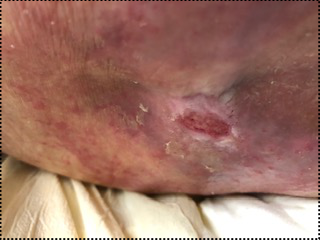
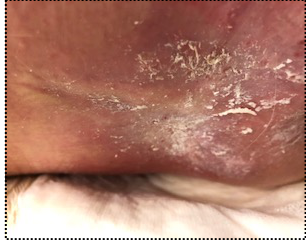
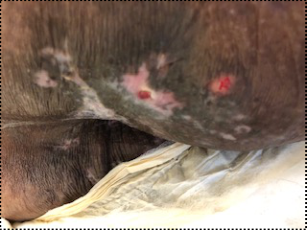
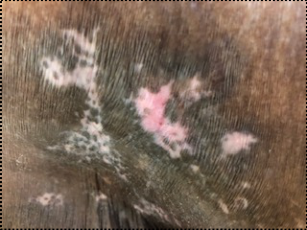
The supplied CWS abstract reviews stage II and III pressure wounds of the sacrum or buttocks over 30 to 45 days. It reports progressive healing in 9 patients, no change in 2, and decline in 2. These observations describe a small retrospective series, not a predicted outcome for another patient.
Presentation
Pressure wounds in long-term care: seven sacral wounds and six buttock wounds in the reported group.
Prior treatment
The report does not provide an individual prior-treatment history for each photographed wound.
Why healing stalled
Pressure-related injury is the clinical context. A separate cause of delayed healing is not established for each case.
CWS intervention
Standard wound care, a keratin-based gel dressing, weekly surgeon assessment and sharp debridement when required. Treatment decisions remained with the clinical team.
Outcome
Nine of thirteen wounds showed progressive healing during follow-up. The report also includes unchanged and declining wounds.
View clinical wound photographs
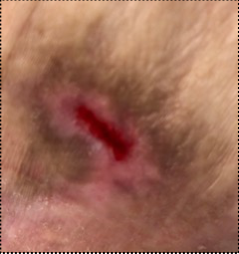
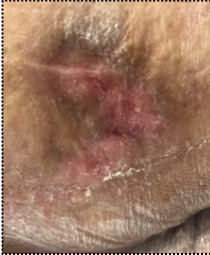
These photographs show open wounds. The original numbered figures are preserved below. Individual dates, wound stages and completed healing are not established by the figure captions.
A second supplied report, by Jonathan Johnson and Chelsea O’Connell, describes seven patients receiving a pHA cleanser alongside comprehensive wound care. The report includes two photographed comparisons. The case summaries below explain what the reports establish and where individual clinical details are unavailable.
Sacral wound: serial follow-up
Presentation
A sacral wound documented in the supplied clinical report.
Prior treatment
Not detailed for this individual case.
Why healing stalled
No single patient-specific cause is established in the report.
CWS intervention
The case caption describes twice-daily pHA cleansing within a wound-care course. The overall program included dressings, assessment and debridement when clinically indicated.
Outcome
The authors describe improvement in wound size and appearance; complete closure is not established.
Sacral wound: following sharp debridement
Presentation
A sacral wound documented in the supplied clinical report.
Prior treatment
Not detailed for this individual case.
Why healing stalled
No single patient-specific cause is established in the report.
CWS intervention
The caption describes sharp debridement followed by twice-daily pHA cleansing.
Outcome
The source presents initial and follow-up photographs. No final closure outcome or standardized measurement of improvement is supplied for this comparison.
Source: Johnson and O’Connell, The Application of Pure Hypochlorous Acid (pHA) Cleanser in Advanced Chronic Wound Management. Small retrospective review; treatment effects cannot be separated from the other care provided. These comparisons do not establish complete wound closure or predict a healing timeline for another patient.
Your next step
Complex from the start, or no longer progressing?
An early specialty evaluation can help determine the right next step. Surgery is considered only when appropriate.