A patient leaves the hospital on a Friday afternoon with a stalled sacral pressure injury and a printed discharge packet. By Monday, the home health nurse is photographing worsening slough and faxing notes to a primary care office that never flags the message. Three weeks pass before anyone asks whether the wound needs surgical debridement, and by then the patient is heading back to the emergency department with an infection.
Most failures in complex wound care don't happen during the dressing change itself. They happen in the silent gaps between clinicians, settings, and caregivers. One team assumes another team is tracking measurements, updating offloading orders, or watching for necrotic tissue.
When clinicians look for practical care coordination examples, they rarely need abstract theory. They need models that repair a specific broken handoff: hospital to home, caregiver to clinician, primary care to specialist, nursing floor to attending physician, or clinic to operating room. Below are eight established models broken down by the exact handoff each one fixes, a tactic your team can copy this week, and the trade-off where each model tends to break down.
## Table of Contents - 1. Transitional Care Model (TCM) - Replicable Tactics for the First 30 Days - 2. Care Transitions Intervention (CTI) - Putting a Wound Record in the Family's Hands - 3. Chronic Care Model (CCM) - Turning a Wound Registry Into Weekly Action - 4. Patient-Centered Medical Home (PCMH) - Closing the Loop on Specialty Wound Referrals - 5. Multidisciplinary Wound Care Team Model - Keeping Multidisciplinary Plans Accountable - 6. Virtual Wound Consultation (Telewound Care) - Running a Two-Stage Remote Triage - 7. INTERACT Program for Skilled Nursing Facilities - Standardizing Escalations on the Nursing Floor - 8. Ambulatory Surgical Pathway for Wound Care - Coordinating a Safe Same-Day Surgical Handoff - How Each Care Coordination Model Handles Complex Wounds - Turning Coordination Models Into a Handoff Checklist
1. Transitional Care Model (TCM)
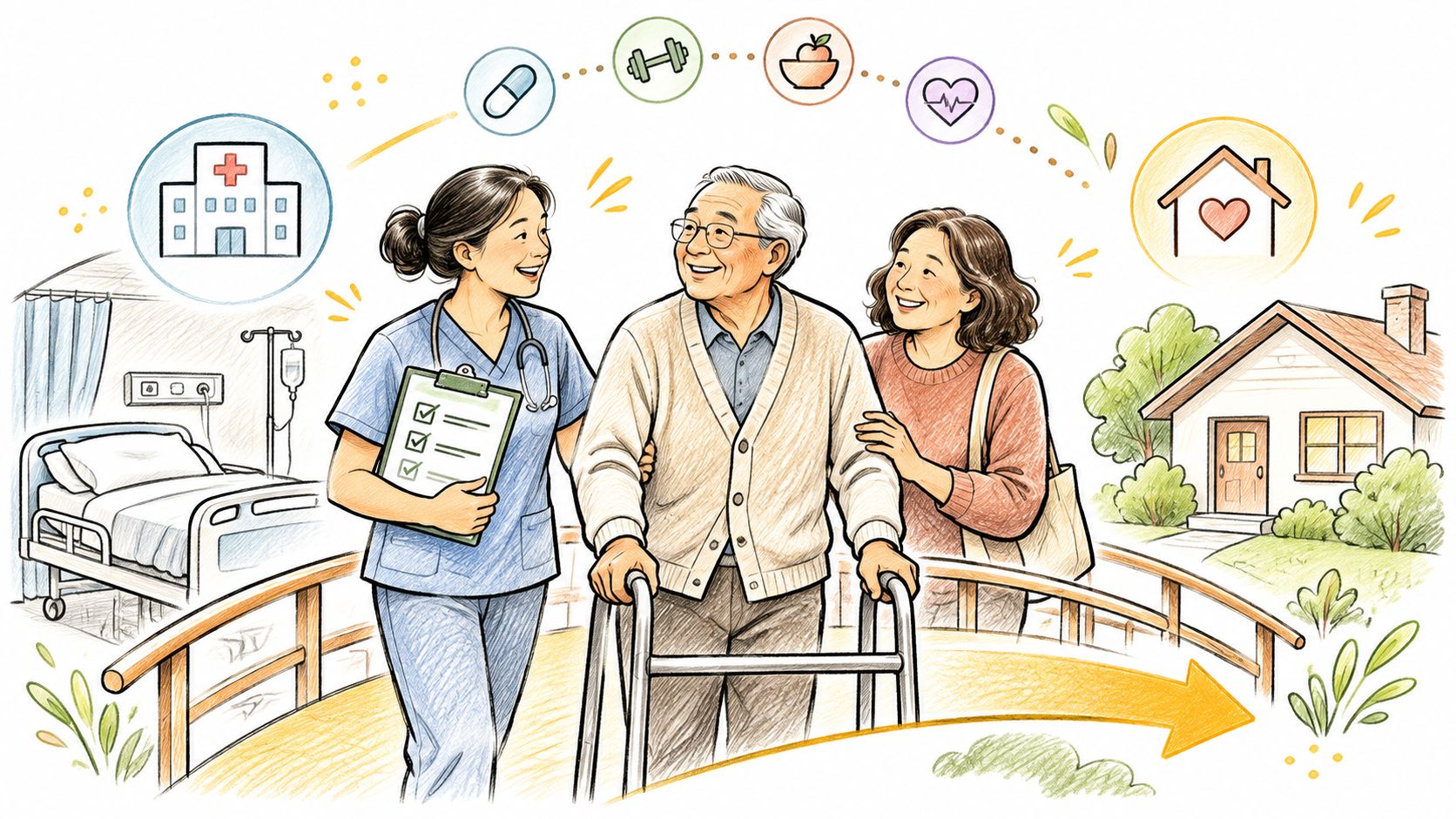
The Transitional Care Model targets the hospital-to-home handoff, where complex wound plans fall apart fastest. Advanced practice registered nurses (APRNs) meet high-risk older adults before discharge, build one shared care plan with the family, and stay directly involved through home visits and scheduled phone calls. Originally tested with older hospitalized adults in the Philadelphia area and later adapted by health systems for heart failure and post-surgical patients, TCM works because the same clinician spans both sides of the discharge door.
In a large transition-care evaluation published on PubMed Central comparing 762 hospitalizations receiving transition-care-coordinator support with 6,276 receiving usual care, unadjusted 30-day readmissions dropped to 9.4% versus 18.8%, and 90-day readmissions fell to 19.8% versus 31.5%. Even after multivariable adjustment, coordinator support remained linked to lower odds of returning to the hospital at 30 days (OR 0.512) and 90 days (OR 0.591).
Coordinated transitions rely on clinical support continuing after the patient leaves the hospital floor.
Replicable Tactics for the First 30 Days
Consider a patient discharged after vascular bypass surgery with a nonhealing heel ulcer. Without pre-discharge coordination, the home health agency often receives outdated dressing orders while the family misses the offloading instructions. To borrow the strongest piece of TCM this week, standardize three steps before the discharge summary is signed:
- Flag High-Risk Wounds Inpatient: Identify patients with stalled wounds, recurrent infections, or limited caregiver support while they're still admitted rather than waiting for a post-discharge referral.
- Send One Written Care Plan Everywhere: Deliver the same dressing protocol, offloading rules, and medication list to the home health nurse, primary care office, and family caregiver simultaneously.
- Lock In a 30-Day Contact Cadence: Schedule specific check-in dates across the first month so worsening drainage or missed supplies surface early instead of at an urgent visit.
Where TCM breaks: Staffing APRNs for intensive in-home follow-up is expensive and hard to scale across rural or understaffed territories. Once the 30-day transition period ends, chronic wounds that still haven't closed can lose momentum unless another team formally takes ownership.
2. Care Transitions Intervention (CTI)
Say an older adult leaves a skilled nursing facility with a venous leg ulcer and returns home to live with an adult daughter who has never wrapped a compression bandage. The Care Transitions Intervention fixes the caregiver-to-clinician handoff by turning patients and family members into active managers of the plan rather than passive recipients of discharge papers. A trained transition coach works with the patient for several weeks across four pillars: medication self-management, a patient-owned personal health record, timely follow-up, and clear red-flag warning signs.
Structured transition work has reshaped national safety benchmarks. According to an analysis in The BMJ, U.S. hospital readmission rates for selected conditions fell from 21.5% to 17.5% between 2007 and 2015, a 4.0 percentage point decline (roughly 18.6% relative to 2007 levels) that coincided with Medicare's Hospital Readmissions Reduction Program starting in October 2012. Hospitals and Medicare-focused community programs adopted CTI-style coaching because medication reconciliation, caregiver education, and clear continuity instructions prevent avoidable returns.
Practical rule: Never hand discharge wound instructions only to the patient. Review dressing frequency, offloading equipment, and infection red flags with the person who will actually buy supplies, drive to appointments, and call the clinic when drainage smells foul.
Putting a Wound Record in the Family's Hands
Your team can copy CTI's personal health record tomorrow using a single printed sheet kept inside the patient's supply bin. List the current wound dimensions, active dressing products, baseline drainage color, the date of the confirmed first follow-up visit, and one direct phone number for urgent questions. Confirm that first follow-up appointment before the patient leaves the building rather than asking a tired family member to call from home.
Where CTI breaks: Coaching assumes the patient or an available caregiver has the cognitive clarity, physical stamina, and time to advocate for care. For isolated patients living with dementia or severe frailty, self-management coaching alone isn't enough and must pair with direct clinical oversight.
3. Chronic Care Model (CCM)
Treating a diabetic foot ulcer only when it looks infected guarantees a cycle of repeat hospitalizations. The Chronic Care Model repairs the episode-to-ongoing-management handoff by organizing clinical information systems, decision support, self-management tools, and community resources around long-term conditions. Integrated U.S. delivery systems originally built CCM around diabetes registries and nurse-led outreach, and primary care clinics now adapt the same framework to track recurring chronic wounds alongside glycemic control and vascular health.
Evidence favors coordinated, multi-layered design over isolated check-in calls. An umbrella review of 24 systematic reviews in BMJ Open found that multicomponent care coordination programs reduced hospital readmissions by 15% to 30%, cut hospital length of stay by 2 to 4 days, and lowered emergency-department visits by as much as 42%. The strongest programs paired multidisciplinary teamwork with medication support, patient education, and structured post-discharge monitoring matched to individual risk.
Coordinating medical care, self-management, and community resources keeps long-term wound patients from slipping between visits.
Turning a Wound Registry Into Weekly Action
Suppose a primary care network manages dozens of patients with neuropathic foot wounds who rotate between podiatry, home health, and endocrinology. Without a shared tracking tool, nobody notices that a wound hasn't shrunk in a month. Build three CCM habits into your weekly workflow:
- Run a Stalled-Wound Registry: Track every active chronic wound in a simple shared list and flag any patient who hasn't shown measurable shrinkage on conservative therapy.
- Align Healing Timelines Across Providers: Set concrete reduction milestones with the patient, primary care clinician, and wound specialist so everyone recognizes when conservative care has plateaued.
- Name One Outreach Owner: Assign a single coordinator to run weekly chart checks, verify compression or offloading adherence, and trigger referrals before tissue breakdown worsens.
Where CCM breaks: Registries only work if someone actively reviews them. Practices often invest in software dashboards while leaving outreach unstaffed, turning proactive coordination back into passive recordkeeping.
4. Patient-Centered Medical Home (PCMH)
When a patient sees a vascular specialist, a podiatrist, a home health nurse, and an infectious disease doctor, someone has to hold the master chart. The Patient-Centered Medical Home addresses the primary-care-to-specialist handoff by placing the primary care practice at the center of referrals, medication reconciliation, and ongoing follow-up. Multi-state payer programs recognize PCMH practices for maintaining continuity and enhanced access, and many offices use PCMH workflows to manage specialty wound referrals.
Without closed-loop primary care coordination, patients and informal caregivers are left stitching records together on their own. The Agency for Healthcare Research and Quality (AHRQ) Care Coordination Measures Atlas cites a study of people living with dementia in which 35% reported receiving only some or none of the help needed from a primary-care office to manage care among providers, while 14% said their doctor only sometimes or never discussed all medications they were taking. Those same communication gaps show up daily in complex wound care when antibiotics, anticoagulants, or offloading changes fail to travel back to the primary chart.
Closing the Loop on Specialty Wound Referrals
Say a primary care physician refers a patient with a nonhealing lower-extremity wound for specialty evaluation. Instead of sending a blank referral order that forces the specialist to guess the history, a PCMH-style coordinator sends a complete packet: recent arterial or venous imaging, the last month of wound notes, active medications, and one explicit clinical question. Just as important, the coordinator sets a tickler date on the primary care calendar to confirm the specialist's note arrived and that home health received the updated orders.
Coordination doesn't mean adding another specialist to the patient's roster. It means making accountability and information transfer visible without displacing the established care team.
Where PCMH breaks: Primary care teams juggle hundreds of competing chronic conditions, and disconnected electronic health records still force staff to chase faxed consult notes manually. If the specialist doesn't return structured recommendations promptly, the medical home can't close the loop.
5. Multidisciplinary Wound Care Team Model
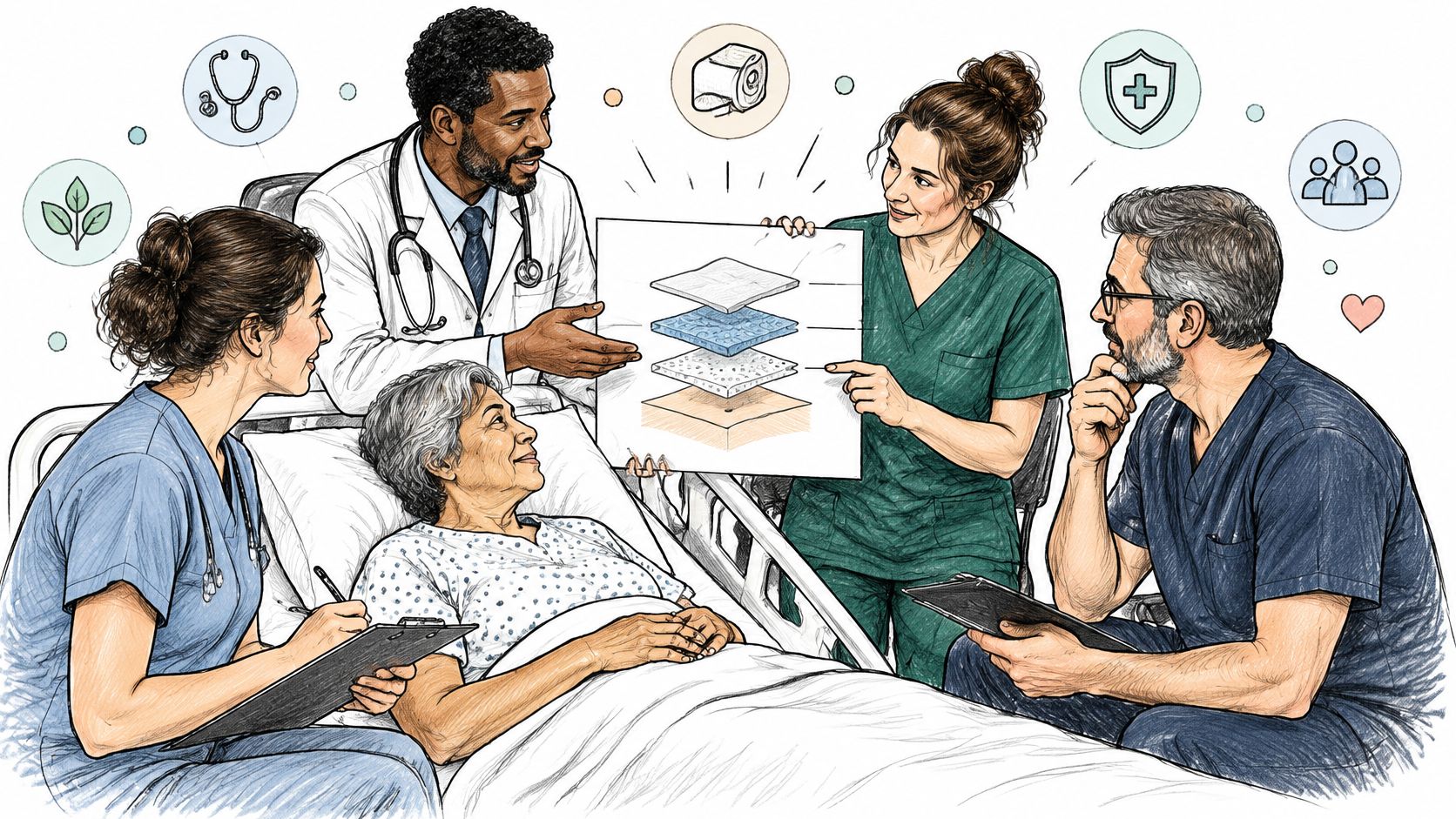
A nonhealing wound is rarely just a skin problem. Underlying arterial insufficiency, poorly controlled diabetes, osteomyelitis, malnutrition, or unrelieved pressure often blocks closure while dressings stay unchanged for months. The Multidisciplinary Wound Care Team Model repairs the single-provider-to-specialty-team handoff by bringing wound surgeons, wound care nurses, podiatrists, vascular specialists, infectious disease clinicians, dietitians, and physical therapists around one shared assessment. Both U.S. hospital-based wound centers and Veterans Affairs wound care programs rely on this structure for diabetic foot ulcers and complex pressure injuries.
A prospective chronic-wound service evaluation in Queensland archived on PubMed Central tracked outcomes over three months after patients entered a specialist multidisciplinary clinic. Forty percent of patients achieved complete healing within three months, mean time to healing was eight weeks, and mean wound size decreased by 85.4% (95% CI, 75.7% to 95.0%). Health-related quality of life also improved from 0.69 at baseline to 0.84 at three months. Those figures are observational benchmarks rather than proof that coordination alone caused healing, yet they illustrate how consolidating specialist assessment and consistent follow-up reduces the fragmentation of bouncing between uncoordinated visits.
Bringing multiple clinical perspectives to the bedside ensures vascular, metabolic, and pressure causes get addressed alongside local wound care.
Keeping Multidisciplinary Plans Accountable
Imagine a patient with a neuropathic plantar ulcer seeing vascular surgery for perfusion and podiatry for offloading. I recommend establishing three ground rules before a multidisciplinary team shares any complex wound case:
- Designate One Lead Clinician: Name the specific specialist who owns the overall timeline and sends consolidated updates back to the referring provider so the patient doesn't receive conflicting dressing instructions.
- Standardize Measurements Every Visit: Record length, width, depth, undermining, and tissue type the same way at every encounter so percentage-area reduction stays objective across providers.
- Define a Surgical Threshold Early: Document in advance which clinical findings, such as persistent necrotic tissue, exposed tendon or bone, or stalled healing after appropriate conservative care, trigger surgical evaluation.
Where this model breaks: Coordinating multiple specialists can create long scheduling delays if visits happen in separate clinics, and diffusion of responsibility creeps in whenever everyone assumes another discipline is updating the referring team.
6. Virtual Wound Consultation (Telewound Care)
For a frail, wheelchair-bound patient living in an assisted living facility or a rural county, a routine specialty appointment can mean hours of medical transport just to hear that current dressings should continue. Virtual wound consultation closes the home-health-to-specialist handoff by pairing secure wound photography, medical records, imaging, and live video with specialist review. Veterans Affairs telehealth initiatives use remote wound consultation to reach rural veterans, while home health agencies rely on teleconsultation to escalate stalled wounds before they require an emergency visit.
Research on care coordination models published on PubMed Central points out that system gaps extend well beyond basic record transfers into patient monitoring, self-management support, and connecting families with local resources. Because effective coordination varies sharply in coordinator role, contact frequency, physician involvement, and technology, there is no single universal template. In wound care, that flexibility supports a two-stage remote-to-in-person pathway.
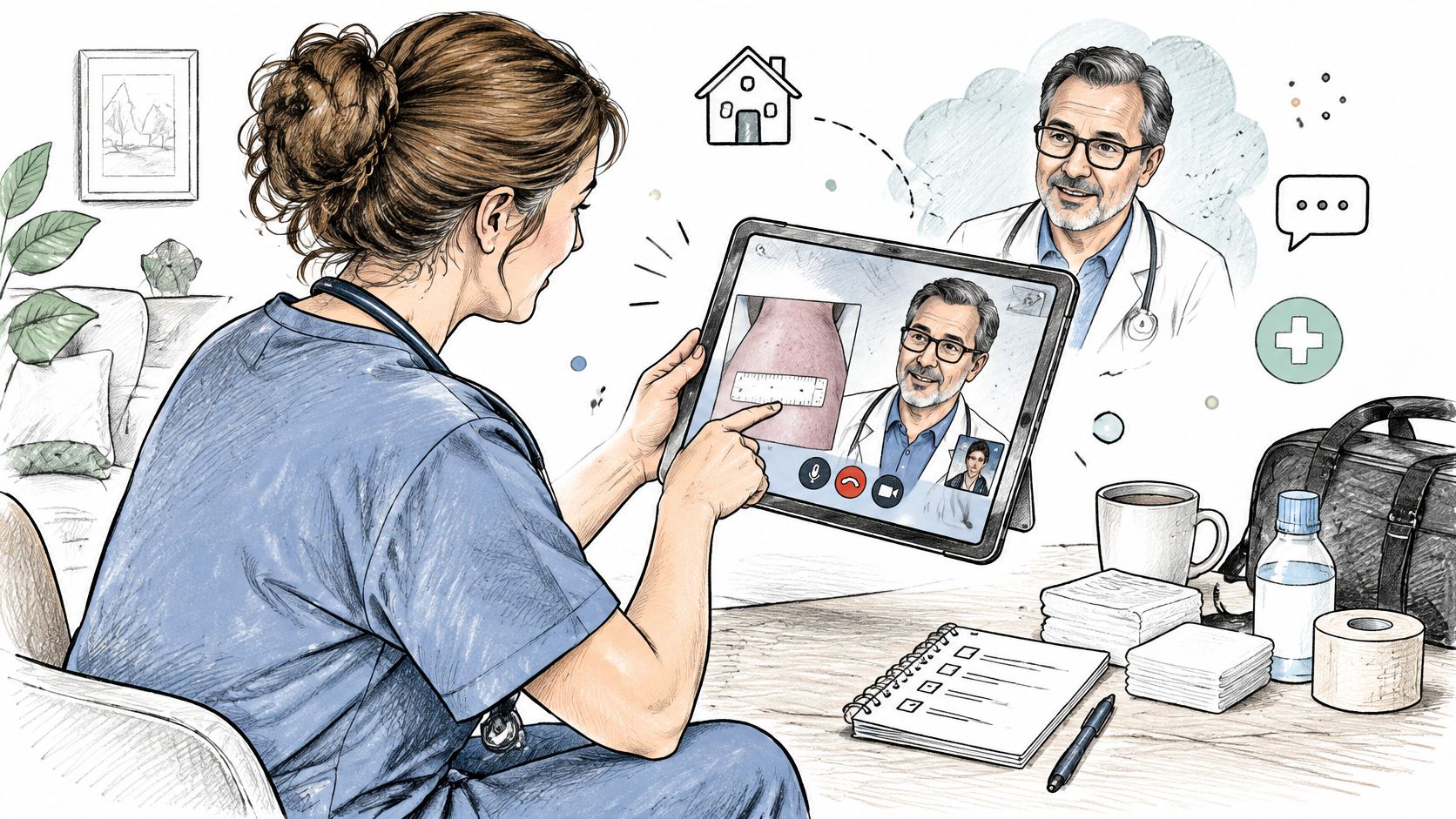
A clinician at the bedside can share live video and structured measurements with a remote wound specialist before moving a fragile patient.
Running a Two-Stage Remote Triage
Say a home health nurse visits a patient whose surgical incision has stopped closing after conservative dressing changes. Instead of booking an immediate ambulance ride, the nurse uploads standardized photographs taken under consistent lighting with a paper measuring tape in frame, alongside treatment dates, exact product names, and recent response to therapy. A structured telemedicine wound evaluation lets a wound specialist review the chart, imaging, and live video first, confirm whether conservative treatment should stay in place, or prioritize an in-person exam when escalation is warranted.
"Virtual review reduces unnecessary travel and speeds up specialist triage, but it never replaces hands-on validation when a wound shows deep tissue trouble."
Where telewound care breaks: Remote images can't palpate induration, probe a sinus tract, or fully assess deep tissue viability. Whenever a case involves necrosis, persistent undermining, exposed bone or tendon, recurrent infection, or stalled healing, a clinician must perform an in-person physical examination to validate findings before moving forward with procedures.
7. INTERACT Program for Skilled Nursing Facilities
Late-night shift changes inside a skilled nursing facility are a classic breakdown point. A nurse notices increased redness and odor around a resident's pressure injury, leaves a brief message for an on-call clinician who doesn't know the resident's baseline, and the resident ends up sent to the emergency department by morning. The INTERACT (Interventions to Reduce Acute Care Transfers) program fixes the facility-to-physician handoff with standardized early-warning tools, Stop and Watch protocols, structured communication forms, and clinical care pathways built specifically for post-acute nursing teams.
U.S. skilled nursing facilities widely deploy INTERACT communication guides with attending physicians and nurse practitioners, including wound pathways that structure how nurses monitor pressure injuries and report changes before a resident destabilizes. Instead of relying on informal verbal handoffs between shifts, the floor nurse documents objective changes in drainage, periwound warmth, pain, or wound dimensions in one predictable layout.
Standardizing Escalations on the Nursing Floor
Picture a skilled nursing resident developing tunneling at the edge of a stage 4 trochanteric wound. Rather than waiting for the weekly wound rounds to notice the shift, a facility can put three INTERACT-inspired habits to work immediately:
- Use One Written Escalation Format: Require every nurse reporting a wound change to include baseline measurements, current dimensions, active dressings, vital signs, and specific new findings before calling the physician or specialist.
- Set Clear Specialty Escalation Triggers: Post objective rules at the nurses' station stating exactly when a stalled or deteriorating wound moves beyond routine facility dressings to specialist review.
- Make Wound Logs Portable: Keep measurements, product history, and photographs in a standardized transfer sheet that travels directly with the resident if an outpatient consultation or hospital transfer becomes necessary.
Facilities that combine standardized bedside reporting with virtual wound care for skilled nursing give their nursing staff faster specialty backup without disrupting resident stability or triggering avoidable transfers.
Where INTERACT breaks: Standardized forms collapse quickly under high nursing turnover and agency staffing. Unless facility leadership audits communication logs regularly and trains incoming nurses on escalation criteria, forms get skipped during busy shifts.
8. Ambulatory Surgical Pathway for Wound Care
For too many patients, needing surgical debridement or soft-tissue repair still means sitting in an emergency room or waiting on an inpatient hospital bed. An ambulatory surgical pathway closes the referring-clinician-to-surgical-setting handoff by delivering appropriate wound procedures in an outpatient ambulatory surgical center (ASC) rather than an acute hospital. Surgical practices across major U.S. metropolitan areas pair office or virtual wound evaluation with ASC-based procedures so medically appropriate patients receive sterile operating-room care, anesthesia support, and same-day return home.
Evaluating why an ambulatory surgical center fits complex wound care comes down to matching setting to clinical risk. Say a patient with a chronic sacral wound has thick necrotic eschar that bedside debridement can't safely clear, yet the patient is medically stable without systemic sepsis. Moving that patient through an outpatient surgical pathway removes the nonviable tissue in a controlled operating room and returns the patient to their home or facility the same day, avoiding the infection exposure and disruption of an inpatient hospital stay.
Coordinating a Safe Same-Day Surgical Handoff
Outpatient wound surgery succeeds or fails on pre-procedure preparation and same-day communication back to the referring team. Put these three controls in place before booking any outpatient wound case:
- Clear Medical and Medication Risks Early: Confirm cardiac status, pulmonary stability, and anticoagulant or diabetes medication holds well ahead of the procedure date so cancellations don't delay care.
- Verify Transport and Post-Op Support: Lock in medical transportation and confirm a family caregiver or facility nurse will be ready to receive the patient upon same-day discharge.
- Deliver Same-Day Procedure Notes: Transmit the operative summary, updated dressing orders, offloading requirements, and follow-up dates to the referring clinician and home health agency the very same day.
Where an ambulatory surgical pathway breaks: Not every wound patient belongs in an outpatient operating room. Patients with hemodynamic instability, severe uncontrolled medical comorbidities, or acute systemic infections requiring intravenous hospital management still need inpatient hospital care.
How Each Care Coordination Model Handles Complex Wounds
| Item | Primary Setting | Who Coordinates | Best For | Key Limitation |
|---|---|---|---|---|
| Transitional Care Model (TCM) | Hospital-to-home and other care transitions | Advanced practice nurse | High-risk older adults with multiple chronic conditions | Requires dedicated nurse staffing and strong provider communication |
| Care Transitions Intervention (CTI) | Post-discharge, typically over about 30 days | Trained transition coach | Patients building skills to manage care after discharge | Depends on patient engagement and may not meet complex clinical needs |
| Chronic Care Model (CCM) | Primary care and broader health system | Team-based care with defined roles | People needing proactive, ongoing chronic condition management | Complex to implement and sustain |
| Patient-Centered Medical Home (PCMH) | Primary care practice | Primary care clinician and care team | Patients needing continuity and coordination across providers | Resources and shared records may be limited |
| Multidisciplinary Wound Care Team Model | Wound care center or hospital | Lead clinician coordinating multiple specialists | Patients with complex or nonhealing wounds | Specialist scheduling can delay care and add cost |
| Virtual Wound Consultation (Telewound Care) | Remote consultation with a specialist | Wound specialist and referring clinician | Patients needing timely specialist input or facing travel barriers | Some assessments still require an in-person examination |
| INTERACT Program for Skilled Nursing Facilities | Skilled nursing facility | Facility staff and clinicians | Residents whose condition changes may need early intervention | Requires ongoing staff training and leadership engagement |
| Ambulatory Surgical Pathway for Wound Care | Licensed ambulatory surgical center | Surgical team | Suitable patients needing outpatient wound procedures | Not appropriate for some patients with significant comorbidities or extensive wounds |
Turning Coordination Models Into a Handoff Checklist
Reading through care coordination examples is only helpful if your team turns them into habits before the next discharge or referral lands on your desk. You don't need to rebuild your entire health system to close the biggest wound-care gaps. Pull the most durable operational step from each model above and run every complex wound case against four straightforward checks:
- Name One Accountable Coordinator: Every patient with a nonhealing or high-risk wound needs one visible owner who tracks records, confirms appointments, and keeps the primary care team, home health nurse, and family aligned.
- Put One Written Plan in Every Pair of Hands: Send the exact same measurements, product names, offloading rules, and warning signs to the patient, caregiver, facility staff, and referring clinician so nobody works from outdated orders.
- Set a Dated Follow-Up Window: Never end an encounter with vague instructions to call if the wound looks worse. Put a specific check-in date on the calendar to confirm shrinkage, verify medication reconciliation, and validate that recommendations were implemented.
- Define Escalation Criteria in Advance: Document the exact findings that move a patient from conservative dressings to specialist review or surgical evaluation, including persistent necrotic tissue, undermining, exposed bone or tendon, recurrent infection, or stalled closure.
When your team needs specialty wound backup without fragmenting care, Wound Services (CWS) works directly alongside existing care teams in Washington, DC, serving skilled nursing facilities, assisted living communities, home health agencies, hospitals, and community providers. Conservative care remains the foundation, and an evaluation never automatically means surgery.
Starting that coordination stays simple for both families and clinicians. Patients or referring providers can book a virtual visit online or email the team, and a dedicated coordinator confirms availability, gathers what the surgeon needs, and outlines next steps. CWS meets patients wherever they are, at home or in a facility, for virtual consultations, and when a procedure is clinically appropriate, a surgical wound-care nurse validates the wound in person and coordinates transportation directly to our co-located ambulatory surgical center. After every encounter, referring providers receive a structured note with clear follow-up recommendations so the established care team stays firmly in the loop all the way toward closure.
---
If you're managing a stalled, recurrent, or potentially surgical wound and want specialty coordination that works alongside your existing care team rather than replacing it, Comprehensive Wound Services offers timely virtual and in-person evaluations in Washington, DC, paired with same-day ambulatory surgical care when clinically appropriate. Visit our site to schedule a virtual consultation, refer a patient, or connect directly with a care coordinator who will keep every handoff moving toward healing.