“Keep it clean and change the dressing” is useful wound-care advice, but it isn't a complete explanation of how wounds heal. If a wound stays the same size despite careful daily care, the next step isn't automatically a different dressing. It's finding what's preventing repair, whether that's poor blood flow, infection, repeated pressure, medication effects, or a treatment plan that can't realistically be followed at home.
## Table of Contents - Why a Wound Stops Healing Even When Treated - Where delays begin - Causes of Delayed Healing at a Glance - Why more than one cause often matters - How Diabetes Slows Repair Through Several Routes - What diabetic foot ulcer outcomes show - What needs checking - Infection and Biofilm That Keep Wounds Inflamed - Why biofilm needs a different assessment - Match testing to the clinical question - Circulation, Smoking and Pressure That Starve Tissue - Pressure and radiation affect the local tissue - Don't overlook venous swelling - Medications and Nutrition That Quietly Slow Repair - Make the medication review specific - Check food intake before buying supplements - How Clinicians Evaluate a Stalled Wound - A structured assessment - Match the finding to the next check - Deciding When to Book a Specialist Wound Evaluation - Make the plan possible at home - Prepare for the appointment
Why a Wound Stops Healing Even When Treated
Say a caregiver cleans a leg wound, applies the prescribed dressing, and records each change. Weeks pass, but the edges haven't moved inward. The caregiver hasn't necessarily done anything wrong. A dressing protects the wound environment, but it can't correct every underlying problem.
After bleeding is controlled, repair involves overlapping phases of inflammation, tissue building, and remodeling. During inflammation, immune cells clear damaged material and respond to germs. During tissue building, new blood vessels, collagen, and skin cells develop. Remodeling strengthens and reorganizes the repaired tissue.
Think of a construction crew that needs power, materials, and access to the worksite. Skilled workers can't finish if the electricity is disconnected or deliveries never arrive. Similarly, repair cells need oxygen, nutrients, and protection from repeated injury.
Where delays begin
Delayed healing means a wound isn't progressing as expected for its type, depth, location, and the person's health. There isn't one universal deadline that fits every wound.
The causes usually fall into overlapping groups:
- The person's health: Blood glucose, circulation, nutrition, and medication exposure affect the body's ability to repair tissue.
- The wound itself: Infection, dead tissue, and repeated pressure can prevent healthy tissue from developing.
- The care plan: An unsuitable dressing, ineffective pressure relief, or missed reassessment can leave the main barrier untreated.
A wound can receive excellent daily dressing care and still need a different medical plan.
Complex wound patients also face fragmented care and long referral waits. We established Wound Services to address those gaps and avoidable hospitalizations. The useful question isn't whether someone followed instructions, but whether the treatment addresses the factor limiting healing.
Causes of Delayed Healing at a Glance
This quick reference connects the main causes of delayed wound healing with their biological effects and the people most likely to encounter them. It's a way to organize questions, not diagnose a wound from its appearance.
Causes of delayed wound healing and how they slow repair
| Cause | How It Slows Repair | Most Affected |
|---|---|---|
| Diabetes and high blood glucose | Impairs immune cells, reduces collagen formation, damages nerves and vessels | People with type 1 or type 2 diabetes |
| Infection and bacterial burden | Keeps inflammation going and destroys new tissue | People with surgical-site wounds, pressure ulcers, or diabetic foot ulcers |
| Biofilm | A protective matrix helps bacteria tolerate antimicrobials and sustains low-grade inflammation | People with long-standing chronic wounds |
| Poor arterial blood flow | Limits oxygen and nutrients needed for repair | People with peripheral arterial disease |
| Smoking | Reduces oxygen delivery and raises infection risk | Long-term smokers |
| Pressure and repetitive mechanical stress | Keeps tissue injured under load | Bed-bound or wheelchair users and people with neuropathy |
| Venous disease and edema | Raises tissue pressure and impairs drainage | People with venous leg ulcers |
| Radiation | Damages small vessels and fibroblasts that rebuild tissue | Patients treated with radiotherapy |
| Corticosteroids and immunosuppressants | Dampen inflammation and early repair signals | Patients on long-term immune-modifying treatment |
| Chemotherapy and some anti-inflammatory drugs | Can interfere with cell division or early healing, depending on the medicine | Patients receiving cancer or arthritis treatment |
| Malnutrition, protein or vitamin deficiency | Limits the building blocks for tissue repair | Older adults, hospitalized patients, and people with inadequate intake |
| Social barriers such as housing, transport, and food access | Prevent pressure relief, adequate nutrition, and timely review | People with unstable housing, limited transport, or no available caregiver |
Why more than one cause often matters
These categories aren't mutually exclusive. A person with diabetes may also have a poorly fitting shoe, reduced arterial circulation, and difficulty obtaining food. Treating only the glucose level leaves the other barriers in place.
The same distinction matters after surgery. An incision that separates may need assessment of tissue viability and infection, but also a review of steroid exposure, nutritional intake, and tension across the wound. A visible problem doesn't necessarily identify its entire cause.
Who is affected is a clue, not proof. Not every person receiving chemotherapy develops delayed healing, and not every chronic wound contains a clinically significant biofilm. The wound's behavior, examination findings, and relevant tests determine which possibilities deserve attention.
A useful starting question is: What does this wound need that the current plan isn't providing? Sometimes the answer is oxygen delivery. Sometimes it's pressure relief, infection control, or enough food to support rebuilding.
How Diabetes Slows Repair Through Several Routes
Blood glucose alone doesn't explain every diabetes-related wound problem. Persistent hyperglycemia can impair immune-cell function, reduce collagen formation, damage peripheral nerves, and contribute to peripheral arterial disease. Those changes affect both the body's ability to build tissue and its ability to protect that tissue.
The interacting pathways are illustrated below.
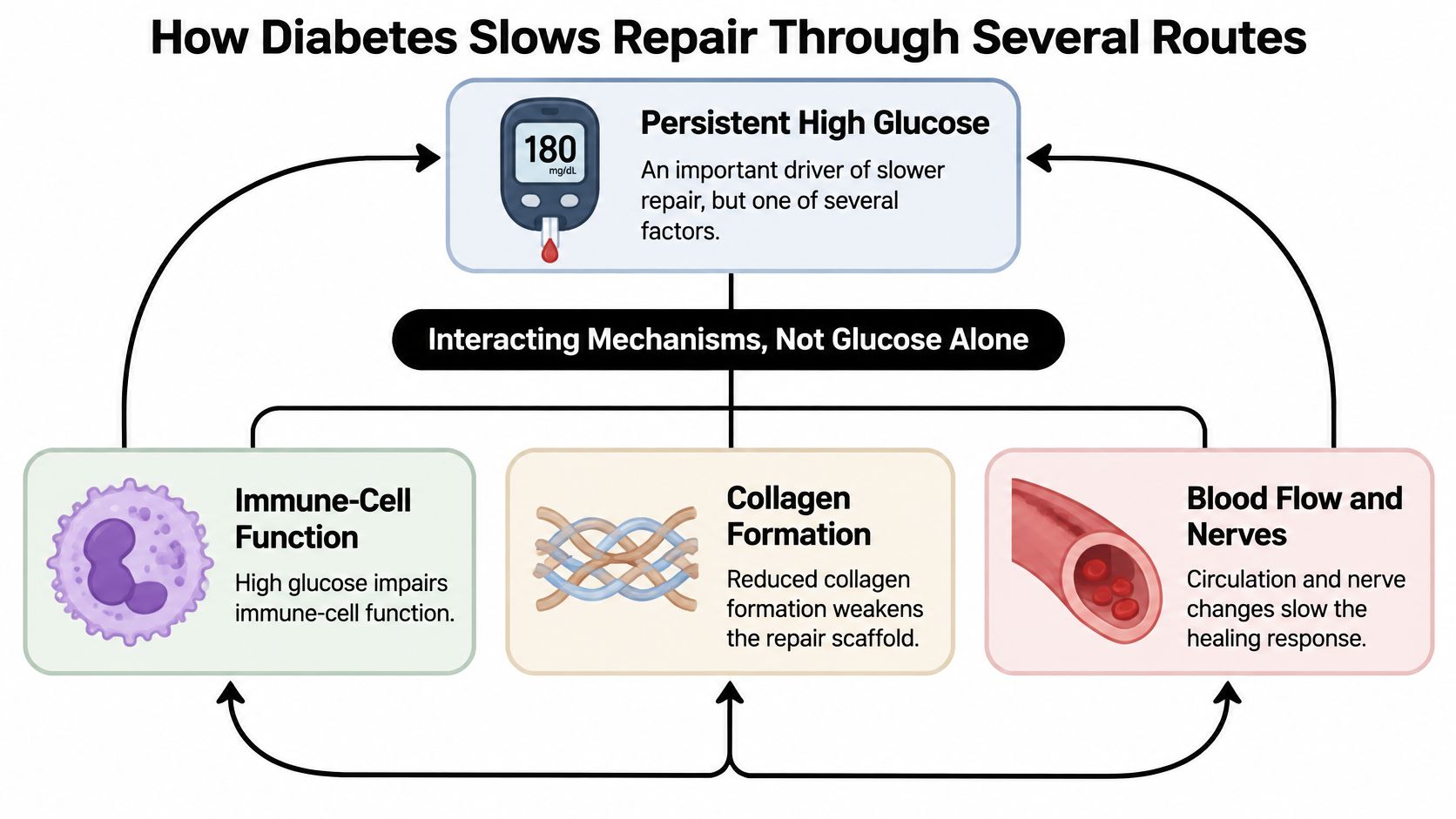
A person with neuropathy may keep walking on an injured area without feeling the warning pain. If arterial disease is also present, the damaged tissue receives less oxygen. Meanwhile, impaired immune defenses make bacterial clearance harder.
At the cellular level, a review of diabetes-related wound mechanisms describes how excess glucose promotes oxidative damage and interferes with immune cells' transition from inflammation toward repair. The result can be persistent inflammation, inadequate new blood-vessel formation, and reduced collagen deposition.
What diabetic foot ulcer outcomes show
A review of diabetic foot ulcers summarizes the following prevalence, healing, and recurrence estimates; prevalence was higher among people with type 2 diabetes than type 1 diabetes.
| Measure | Figure |
|---|---|
| Worldwide prevalence of diabetic foot ulcers | 6.3% |
| Prevalence in North America | 13.0% |
| Prevalence in Africa | 7.2% |
| Prevalence in Asia | 5.5% |
| Prevalence in Europe | 5.1% |
| Prevalence in Oceania | 3.0% |
| Healed within 12 weeks | 30% to 40% |
| Still unhealed at 12 months | About 23% |
| Recurrence within one year | 42% |
| Recurrence within five years | 65% |
These are population estimates, not a forecast for an individual wound. Prevalence describes how common ulcers are among people with diabetes; it doesn't describe the likelihood that a particular ulcer will heal. Recurrence also makes clear that skin closure isn't the end of preventive care.
What needs checking
The evaluation should include glucose trends or HbA1c, a vascular examination, a neuropathy screen, and pressure relief, often called off-loading. Off-loading means reducing the force applied to the injured area, not covering it.
Diabetes also matters beyond foot ulcers: a 2025 retrospective study in the Journal of Clinical Medicine reported delayed healing in 40% of diabetic patients after abdominal surgery, compared with 12% of nondiabetic patients. That comparison supports closer postoperative assessment, but it doesn't establish that diabetes was the only reason any individual incision healed slowly.
Infection and Biofilm That Keep Wounds Inflamed
A wound can stay inflamed even when its surface is covered and dressings are changed regularly. An abscess or dead tissue may keep infection going; addressing that source, when clinically appropriate, is called source control.
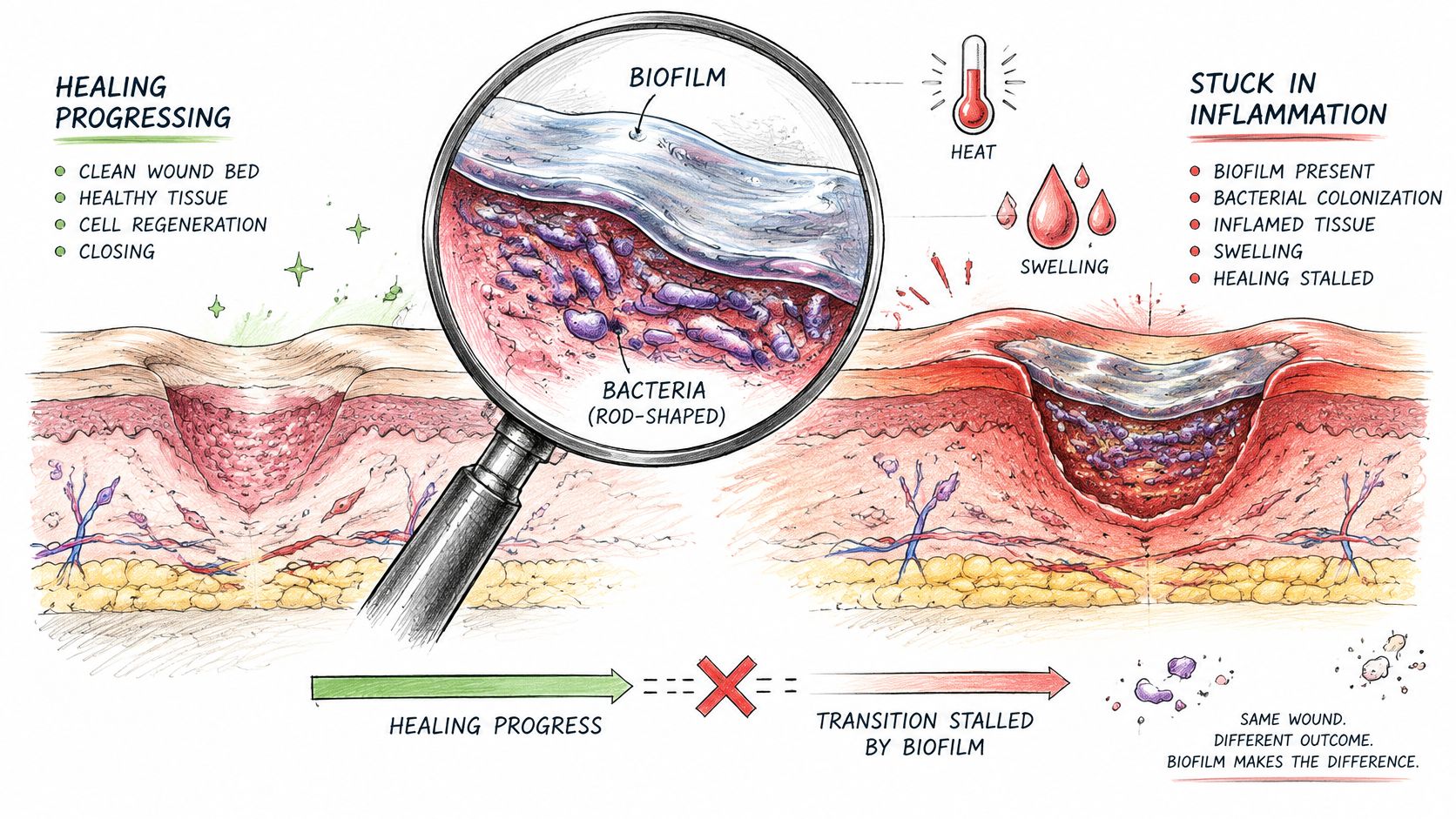
Microorganisms and the inflammation they trigger can interfere with the transition to new tissue formation. Persistent infection may damage tissue, contribute to necrosis, or cause a surgical incision to separate.
A multicenter analysis found that delayed healing was common among the surgical-site wounds evaluated. This finding applies to that study population, not to infection rates among all surgical patients.
Why biofilm needs a different assessment
A biofilm is a community of microorganisms held within a protective matrix. The matrix can make microbes harder for immune defenses and antimicrobial treatments to reach, allowing inflammation and tissue injury to persist.
Consensus guidance on wound biofilms describes their association with delayed healing and notes that bedside identification is difficult. A wound that heals slowly should not automatically be called a proven biofilm infection.
Patterns that warrant reassessment include:
- Little measurable change: Repeated measurements show minimal progress.
- Improvement followed by breakdown: The wound begins to improve, then deteriorates again.
- Persistent surface changes: Slough, odor, or unusual drainage continues.
- Recurring infection: Symptoms return after treatment.
These signs can have more than one explanation. Reduced blood supply, material retained in the wound, or ongoing pressure may cause similar problems.
This video provides additional wound-care context.
Match testing to the clinical question
A clinician examines the wound for an abscess, undermining beneath its edges, exposed structures, and dead tissue. Debridement may be appropriate to remove devitalized material; deep tissue should not be removed at home.
A positive organism test does not, by itself, show that systemic antibiotics are needed. Colonization and clinical infection are different: results need to be interpreted alongside symptoms and examination findings. Information about molecular wound testing can help frame questions about detecting organisms, but testing does not replace clinical assessment.
Culture and systemic treatment should be guided by evidence of infection. A clinician also considers whether other factors are preventing the wound from progressing.
Circulation, Smoking and Pressure That Starve Tissue
Repair cells need oxygen for bacterial killing, new blood-vessel formation, skin coverage, and collagen production. A wound may look adequately protected while the tissue beneath it receives too little oxygen to complete those tasks.
Peripheral arterial disease restricts blood entering the limb. Clinicians examine pulses and may use an ankle-brachial index, which compares blood pressure at the ankle and arm. When that result may be unreliable, including in some people with diabetes, toe-pressure testing or other vascular studies may be needed.
Smoking adds another avoidable barrier. A 2024 Journal of Clinical Medicine study identified long-term smoking as an independent risk factor for infection in chronic non-healing wounds, with an odds ratio of 4.122. That's a measure of association in the study, not a statement that every smoker has the same individual risk.
Pressure and radiation affect the local tissue
Pressure on a heel, sacrum, or area beneath a shoe or brace can repeatedly injure tissue. A patient with reduced sensation may not notice the damage. The assessment therefore includes footwear, seating, transfers, bed positioning, and whether prescribed off-loading is usable.
Radiation can damage small vessels and the cells that form supporting tissue. A wound within a previously treated area deserves a treatment-history review, even when the skin injury appears minor.
Practical rule: A more absorbent or more advanced dressing can't substitute for restoring blood supply or removing damaging pressure.
Don't overlook venous swelling
Venous disease creates a different circulation problem: blood and fluid don't drain effectively from the leg. Edema, or swelling, increases tissue pressure and contributes to persistent drainage and fragile surrounding skin.
Clinicians assess the swelling pattern, skin changes, mobility, and arterial circulation. Compression may be part of a venous-ulcer plan, but its suitability and strength require assessment, particularly when arterial disease may coexist.
The examination should distinguish inadequate inflow, impaired drainage, and mechanical loading rather than grouping them all under poor circulation. Even a wound showing some improvement still needs vascular assessment when the blood supply is questionable. Partial progress doesn't prove that oxygen delivery is adequate.
Medications and Nutrition That Quietly Slow Repair
A medication can affect healing without causing an obvious change at the wound surface. Corticosteroids and immunosuppressants may dampen the signals needed for early repair. Chemotherapy can interfere with rapidly dividing cells, while some anti-inflammatory medicines can affect early healing.
Consider a patient taking a prolonged steroid course for arthritis whose surgical wound separates. Replacing the dressing may help manage drainage, but it doesn't answer whether medication exposure is contributing. The prescriber needs to weigh the wound problem against the condition the drug is treating.
Don't stop steroids, cancer treatment, or immune-modifying medicine on your own. Abrupt changes can be harmful, and a medication that carries healing risks may still be necessary.
Make the medication review specific
Bring more than the names of prescription drugs. Timing, dose changes, and nonprescription products can change the interpretation.
- Complete medication list: Include prescriptions, over-the-counter pain medicines, supplements, creams, and injections.
- Start dates and changes: Note what began or changed around surgery or wound deterioration.
- Treatment indication: Explain why each medicine is needed so the prescriber can consider safe alternatives or adjustments.
- Actual use: Report what you take, including missed doses or products not shown in the medical record.
Check food intake before buying supplements
Healing requires enough energy and protein to support immune function and tissue formation. Inadequate carbohydrate intake and vitamin deficiencies can also interfere with repair.
A person can have a larger body size and still eat too little protein or have a restricted, nutritionally inadequate diet. Conversely, slow healing doesn't automatically mean a vitamin deficiency is present.
Useful checks include recent weight trends, a short food-intake history, restricted diets, appetite, and difficulty chewing or swallowing. Unintentional weight loss or routinely missing meals should prompt closer assessment.
Supplements aren't a substitute for dependable meals, and high-dose vitamins aren't automatically helpful. A nutrition plan should fit the person's medical conditions, appetite, budget, and ability to obtain and prepare food. If those basics aren't addressed, even a carefully written recommendation may be unusable.
How Clinicians Evaluate a Stalled Wound
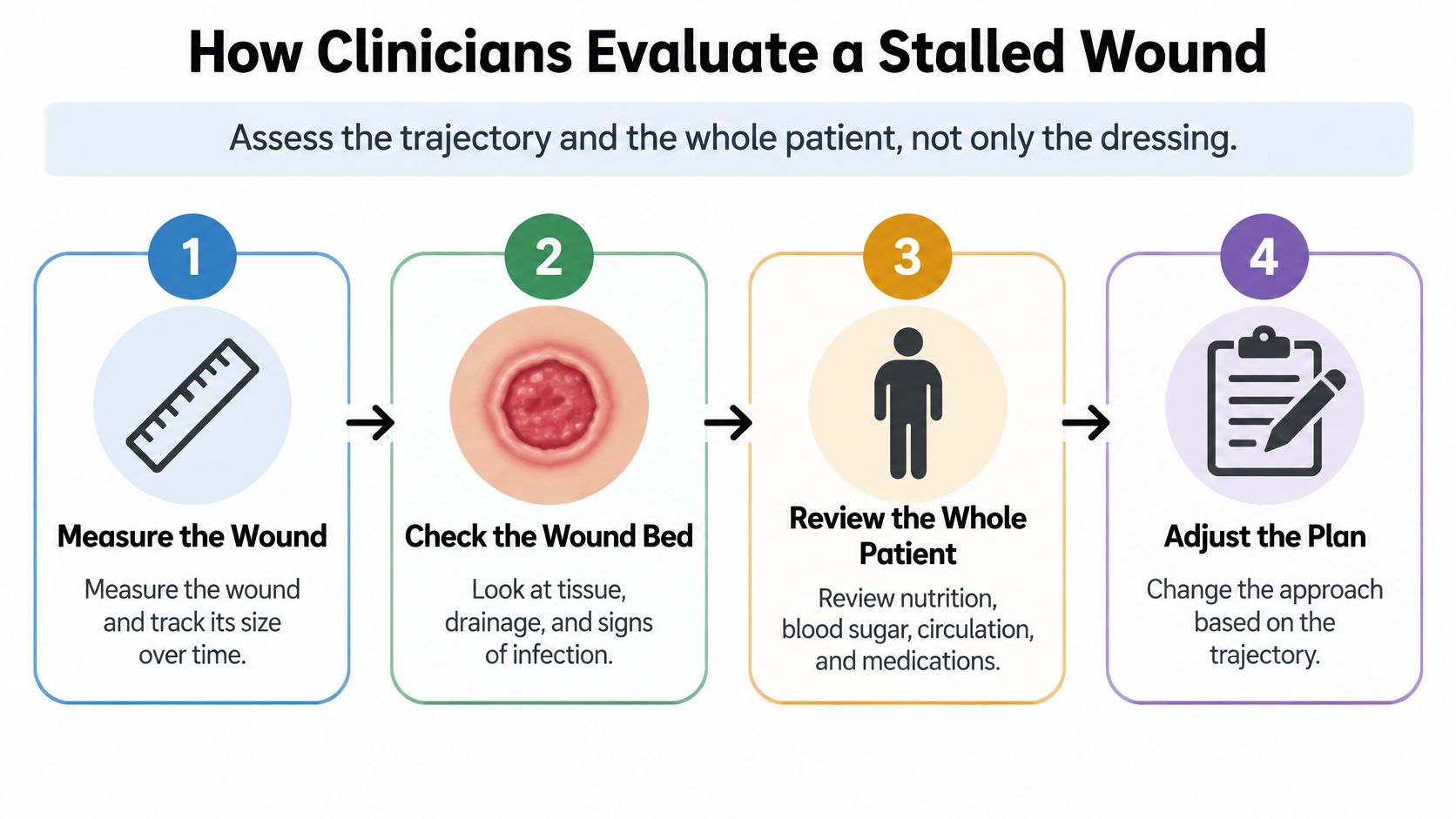
A stalled wound needs assessment of its trajectory and the whole patient, not just its latest appearance. A clinical review of wound-healing barriers supports evaluating perfusion, pressure, infection, medication exposure, nutrition, edema, and mechanical stress rather than assuming that nonhealing reflects poor adherence.
The process combines repeatable measurements with a search for the limiting factor.
A structured assessment
- Measure consistently. Record length, width, depth, and relevant pockets using a consistent method. Compare measurements across visits rather than relying on memory.
- Examine the wound bed. Identify viable tissue, necrosis, drainage, undermining, and exposed tendon or bone. Assess the surrounding skin too.
- Assess perfusion. Examine circulation and arrange appropriate vascular testing when findings or history raise concern.
- Look for infection. Evaluate local changes, spreading redness, recurrent deterioration, and possible deeper involvement. Testing should answer a clinical question.
- Review pressure in daily life. Ask about walking, footwear, sitting, sleeping, transfers, and the practicality of off-loading.
- Reconcile systemic factors. Review medications, nutrition, glucose trends, edema, and relevant laboratory testing.
- Decide whether to escalate. Deep structural involvement, nonviable tissue, recurrent infection, or persistent failure to progress may require specialist assessment.
Match the finding to the next check
These findings suggest possibilities; none should be treated as a diagnosis in isolation.
| Finding | What It Suggests | What Gets Checked |
|---|---|---|
| No measurable size reduction over repeated visits | Stalled repair from infection, perfusion, or pressure | Serial measurements, perfusion testing, off-loading review |
| Necrotic or dead tissue | Devitalized tissue blocking repair | Blood supply and suitability for debridement |
| Persistent undermining | A deep pocket that can hold infection | Clinician assessment of depth and imaging when indicated |
| Exposed tendon or bone | Deep infection or unsupported tissue | Imaging when indicated and specialist surgical review |
| Recurrent infection or cellulitis | Uncontrolled source or possible biofilm | Source control and culture guided by clinical signs |
| Persistent slough or malodor | Possible biofilm or high bacterial burden | Cleansing and debridement review |
| Recurrent breakdown after transient improvement | Ongoing mechanical load or systemic barrier | Off-loading review and targeted systemic testing |
| Excessive or abnormal exudate | Infection or moisture imbalance | Wound examination and culture when indicated |
| Minimal improvement despite appropriate care | Medication, nutrition, or glucose barrier | Medication reconciliation, nutrition review, and glucose trends |
Our advanced wound care information outlines care for complex wounds. We identify lack of size reduction, necrosis, undermining, infected tissue or recurrent cellulitis, exposed tendon or bone, persistent slough, recurrent breakdown, and minimal improvement despite appropriate care as reasons a wound may deserve surgical evaluation.
We review the history, wound, imaging, and treatment response virtually, then a surgical wound-care nurse validates the wound in person. That helps confirm what was visible remotely.
Following instructions faithfully doesn't rule out a hidden barrier. No measurable reduction over repeated visits calls for reassessment, not more time alone.
Deciding When to Book a Specialist Wound Evaluation
Book specialist review when a wound isn't progressing despite appropriate care, repeatedly returns, or develops concerning deep-tissue findings. An evaluation doesn't automatically mean surgery. It should clarify the cause, the options, and whether conservative treatment needs adjustment.
Don't wait for a routine appointment if there's rapidly spreading redness, fever with wound deterioration, sudden severe pain, or a newly cold, pale limb. Those changes need urgent medical assessment.
Make the plan possible at home
Social circumstances are clinical constraints, not merely inconveniences. A review in ACS Pharmacology & Translational Science describes how food access, housing, transportation, supplies, and caregiver availability influence nutrition, infection exposure, pressure relief, and continuity of care.
When the plan is medically sound but practically impossible, change the delivery of care rather than labeling the patient noncompliant.
- No dressing caregiver: Clarify who can perform changes and whether home-health support or a clinician-adjusted schedule is feasible.
- Unreliable transport: Arrange travel support where available or use remote assessment when appropriate.
- Inadequate pressure relief: Review the actual bed, chair, equipment, and transfer needs.
- Food or supply shortages: Identify affordable, accessible options and available assistance before issuing another shopping list.
Emerging smart dressings can monitor features such as temperature, moisture, oxygen, pH, and metabolites. They aren't routine care and don't replace examination or a workable treatment plan.
Prepare for the appointment
Bring your medication list, glucose records, dated wound photographs, measurements, and notes about home barriers. Include previous imaging and treatment information if available.
We offer virtual consultations in which a wound surgeon reviews the history, images, and wound by video, usually within days. Our escalation pathway describes how a stalled wound can move toward specialist assessment while remaining connected to the existing care team.
Expect an assessment, not a guaranteed result. Outcomes vary with wound type, health history, and the care plan.
---
Wound Services offers virtual and in-person specialty evaluation for complex, stalled, and recurrent wounds, with surgical intervention considered only when clinically appropriate. If your wound isn't progressing despite careful treatment, visit Comprehensive Wound Services to request an evaluation and bring the records that show how it has changed over time.